
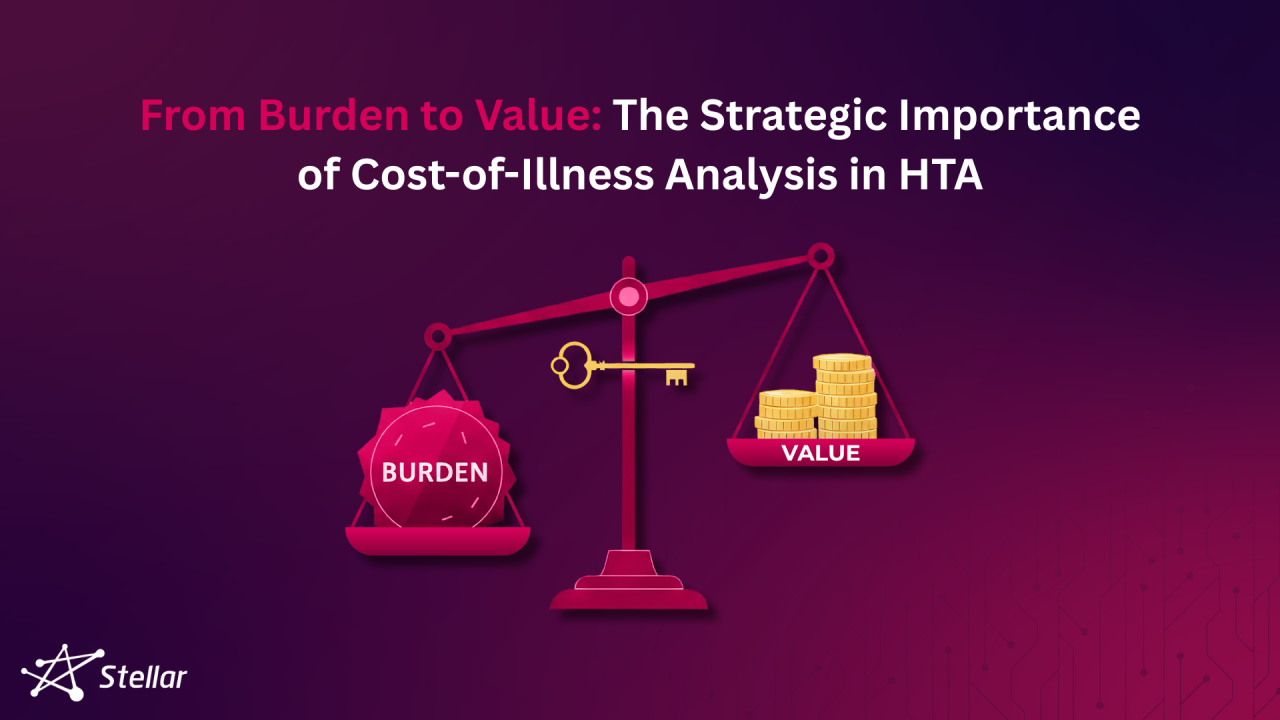
Cost-of-illness (COI) analysis is a foundational economic evaluation in healthcare. It measures the total economic burden of illness on society. The primary goal is to quantify health resource utilization and production losses resulting from disease. This baseline clarifies the societal impact of health conditions. The analysis assumes the economic cost of illness shows the potential benefit of eliminating the disease. COI studies are thus a critical starting point for health technology assessment (HTA).
COI analysis differs from other economic evaluations because it is descriptive rather than comparative. It does not assess cost-effectiveness or cost-utility but instead focuses on identifying and quantifying the economic burden of illness. This approach enables policymakers to:
- Rank diseases by their global burden, helping prioritize interventions and allocate resources efficiently.
- Identify the main cost components, such as direct medical costs, indirect costs (e.g., productivity losses), and intangible costs (e.g., pain and suffering), which can inform targeted cost containment strategies.
- Monitor the implementation and impact of health policies to identify gaps or inefficiencies in care delivery.
- Reveal the actual clinical management of illness at a national level, supporting the re-engineering of processes and the development of clinical guidelines.
- Explain cost variability by analyzing relationships between costs and factors such as disease severity, patient demographics, and provider characteristics, which aids in forecasting future healthcare needs and optimizing service provision (1).
COI studies have been widely used by organizations such as the World Bank, WHO, and the US National Institute of Health, and remain among the most common economic studies in healthcare both in Italy and internationally. While their usefulness as a decision-making tool has been debated, COI analysis continues to provide essential information for evidence-based policy and resource allocation (2).
Conclusion
In summary, COI analysis is a vital component of HTA, offering actionable insights that inform policy, guide resource allocation, and support the improvement of clinical management and patient outcomes. By understanding the full economic impact of illness, stakeholders can drive innovation, enhance efficiency, and ensure that resources are directed where they are most needed.
References
1- Tarricone R. Cost-of-illness analysis: What room in health economics? Health Policy. 2006;77(1):51–63. doi:10.1016/j.healthpol.2005.07.016
2- Bloom BS, Bruno DJ, Maman DY, Jayadevappa R. Usefulness of US cost-of-illness studies in healthcare decision-making. Pharmacoeconomics. 2001;19(2):207–13.